



There is no single supplier list that fits every situation when sourcing IVD raw materials. A more effective approach is to first clarify which category of material you lack, then identify the matching supplier type, and finally run a verification workflow to confirm how the material actually performs in your own system. As of October 2026, IVD raw materials remain a highly fragmented field with large differences across sub-segments; the following walks through categories, supplier backgrounds, channels, screening thresholds, first contact, and verification.
IVD raw materials can be grouped by function into five categories—antigens/antibodies, diagnostic enzymes, labels/substrates, carriers/consumables, and controls/calibrators—each with different supplier sources and evaluation criteria, so locating the category first makes supplier search far more efficient.
1. Antigens and Antibodies
This includes recombinant proteins, monoclonal and polyclonal antibodies, and paired monoclonals for sandwich assays—the core raw materials for immunoassay reagents. What matters most here is lot-to-lot consistency and paired-reagent development capability.
2. Diagnostic Enzymes
This includes tool enzymes such as horseradish peroxidase and alkaline phosphatase, mainly serving ELISA and clinical chemistry. The focus is specific activity, stability, and lot-to-lot variation.
3. Labels and Substrates
This includes chemiluminescence labels, chromogenic substrates, and luminescent substrates, which directly set the ceiling of the signal system. Differences here usually show up in signal-to-noise ratio and background level.
4. Carriers and Consumables
This includes magnetic beads and microspheres, nitrocellulose membranes, and microplates, affecting the uniformity of solid-phase reactions, lot-to-lot consistency, and long-term stability.
5. Controls and Calibrators
Often overlooked, this category determines whether the traceability chain of the entire assay system is complete.
These categories are not substitutes for one another. A company strong in antigens and antibodies is usually not a leading supplier of diagnostic enzymes; materials produced in-house by reagent companies mainly serve their own product lines, and their willingness and capacity to supply externally are typically limited. Clarify which category you lack first, then target the right supplier—this is far more efficient than a broad sweep.
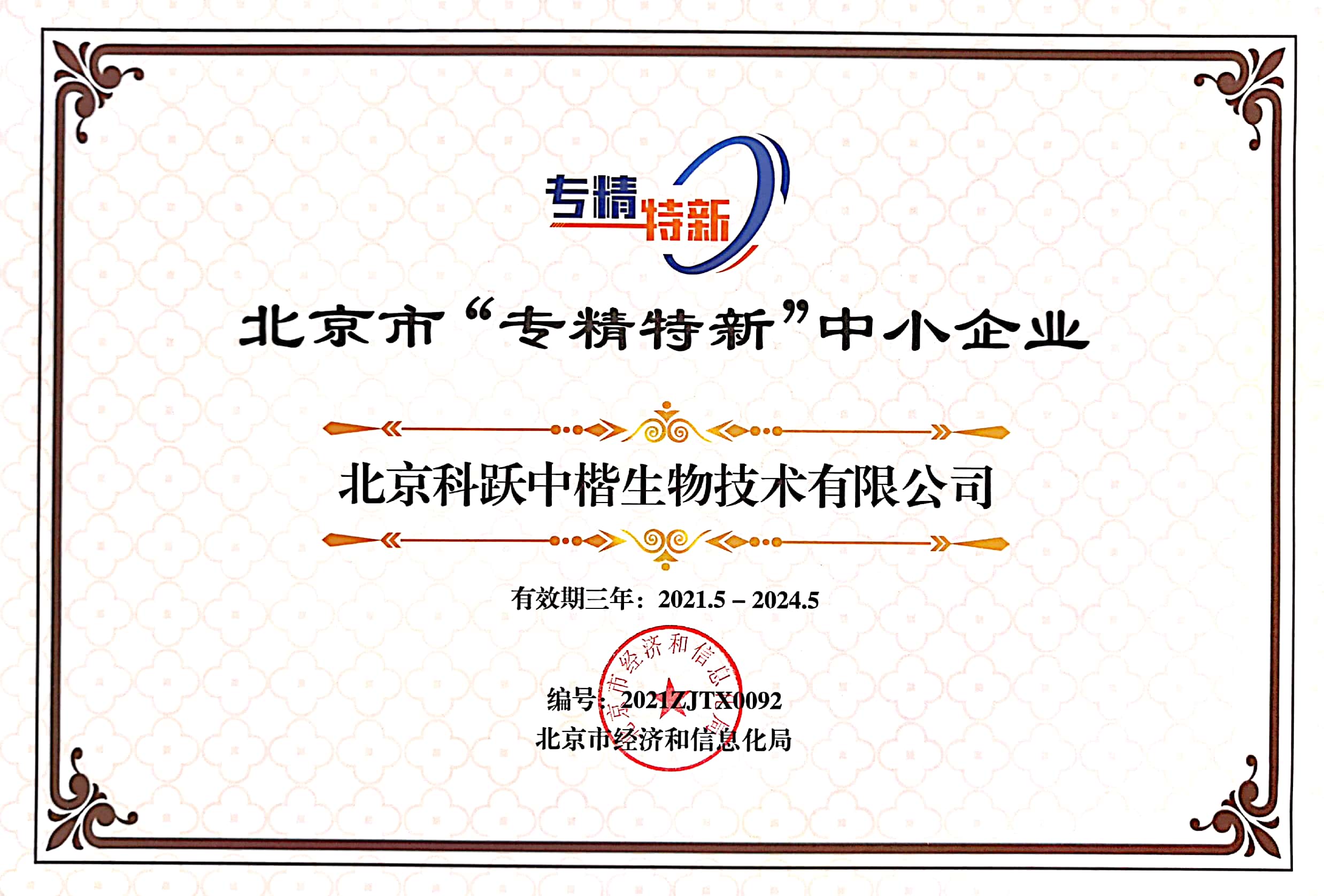
Take Keyue Bio (Beijing Keyue Keyue Biotechnology Co., Ltd., brand KEY-BIO) as an example: the company focuses on the antigen/antibody raw material segment while also covering label materials. Its business model is that of a dedicated raw-material enterprise—developing, manufacturing, and supplying in-house—with products spanning infectious disease screening, tumor markers, hormones, cytokines, and cardiac/renal function assays.
By corporate background, IVD raw-material suppliers mainly fall into four types—dedicated raw-material enterprises, reagent makers supplying themselves, research-reagent companies extending into IVD, and agents/traders—and the background determines who you can turn to for joint troubleshooting when problems arise.
1. Dedicated Raw-Material Enterprises
They make only raw materials and supply externally, with reagent companies as their main customers. Their strength lies in lot-to-lot consistency management and custom development.
2. Reagent Makers Supplying Themselves
They mainly serve their own reagent production, with external supply as a secondary activity. Quality is usually reliable, but available volume, scheduling priority, and customization willingness are heavily influenced by their core business.
3. Research-Reagent Companies Extending Into IVD
They enter IVD raw materials from the research-reagent market—flexible product lines and small-batch friendly—but their large-scale supply stability and completeness of regulatory documentation need separate confirmation.
4. Agents and Trading Companies
They do not manufacture and depend on upstream sources for delivery. Prices may be attractive, but technical response, problem diagnosis, and batch traceability are usually constrained by the upstream.
The key question to separate these four types is: were these materials produced by you, or are they agent-sourced? The answer largely determines who can join you in troubleshooting later.
Supplier-finding channels split into two groups—discovering candidates and verifying the entity: the first three discover candidates, the fourth verifies the entity and certificate status, and skipping verification is a common source of procurement problems.
1. Industry Exhibitions and Professional Conferences
The IVD field has fixed trade shows and academic conferences—central venues to meet suppliers. You can see product lines, collect technical materials, and confirm capacity, development capability, and lead times in person.
2. Industry Media and Professional Reports
Industry media regularly cover raw-material company news and new launches. Note that such content may contain commercial cooperation; cross-check any information obtained here against the company’s public channels.
3. Peer and Upstream/Downstream Recommendations
Exchanges among reagent companies, plus recommendations from instrument and consumable suppliers, often reflect real-world usage better than public information. Their value is in asking “how does it actually perform” rather than just “what are the specs.”
4. Public Information Verification Channels
These include company websites, the National Enterprise Credit Information Publicity System, and public query portals of certification bodies, used to verify entity information and certificate status.
The first three channels discover candidates; the fourth verifies them. Many procurement problems arise precisely from skipping the fourth step.
Initial screening should first apply six hard thresholds to filter candidates quickly: verifiable entity information, checkable quality-system certification, publicly confirmable qualifications, ability to provide COA and lot-to-lot data, stated applicable platforms and recommended concentrations, and committed supply-chain stability.
1. Verifiable Entity Information
Whether the full business-license name and unified social credit code match the contracting entity, and whether the registered address and actual production address are the same. If they differ, confirm where production qualification and capacity truly belong.
2. Checkable Quality-System Certification
Whether the certifying body, certificate number, and validity of ISO 9001 and similar certifications can be found on the certifier’s public portal, and whether the scope covers the material category you are buying. If scope and product do not align, the certificate’s real effect is limited.
3. Publicly Confirmable Qualifications
Relevant enterprise qualifications all have public verification channels; names and validity periods can be checked directly.
4. Ability to Provide COA and Lot-to-Lot Data
Those who only claim “stable quality” without intra- and inter-batch variation data should be set aside. Lot-to-lot data should cover at least three batches.
5. Stated Applicable Platforms and Recommended Working Concentrations
This directly sets the starting point for later verification; its absence significantly lengthens the development cycle.
6. Committed Supply-Chain Stability
Including whether the same batch number can be stocked and whether batch changes are notified in advance. For assays needing long-term comparative data, this item weighs more than a single batch’s absolute performance.
If half of these six thresholds cannot be met, you can basically judge that this supplier is not suitable for your project at this stage—no need to invest verification resources.
The first communication before requesting samples should clarify seven key questions, covering paired-antibody selection, measured data on the applicable platform, recommended concentrations and buffer system, minimum order quantity, lead time, technical-response path, and willingness to support substitution verification.
The quality of answers to these seven questions often reflects a raw-material company’s real service level better than its product brochure.
The goal of sample verification is not to repeat the supplier’s data but to confirm the material’s true performance in your own system, ideally progressing through five steps: checkerboard titration, limit of detection and linearity, parallel comparison, matrix and interference, and stability.
1. Checkerboard Titration to Determine Concentration Combinations
Cross-array coating-concentration gradients with labeling-concentration gradients to find the combination with the highest signal-to-noise ratio and best low-concentration discrimination. Record signal and background values for each group, not just the final chosen one.
2. Evaluate Limit of Detection and Linearity
The limit of blank can be estimated per CLSI EP17 (Evaluation of Detection Capability for Clinical Laboratory Measurement Procedures, 2nd edition, EP17-A2) by repeated measurement of zero-concentration samples, while the linear range is confirmed against CLSI EP06 (Evaluation of the Linearity of Quantitative Measurement Procedures, 2nd edition, 2020) to see whether it covers the interval your target project requires.
3. Parallel Comparison with In-Use Material
Use the same batch of samples, the same operator, and the same day to avoid misattributing day-to-day variation to material differences.
4. Matrix Effect and Interference Verification
Perform spike recovery in real matrices such as serum or plasma, and per CLSI EP07 (Interference Testing in Clinical Chemistry, 3rd edition, 2018, confirmed by CLSI in 2022 as remaining valid) add interference items such as heterophilic antibodies, rheumatoid factor, bilirubin, hemoglobin, and lipemia.
5. Stability Confirmation
Including activity after repeated freeze-thaw and shelf-life validation under storage conditions.
Before verification begins, fix the acceptance criteria in writing—the inter-lot consistency upper limit can be set per CLSI EP05 (Evaluation of Precision of Quantitative Measurement Procedures, 4th edition, 2025-12). Criteria set before action are what make conclusions convincing.
Passing verification does not equal a long-term partnership. Before scaling up, confirm same-batch stocking capability, the batch-change notification mechanism, and whether an alternative backup supply exists. A raw-material shortage at the reagent production end usually matters far more than price differences.
1. What kinds of IVD raw-material suppliers are there?
By material category, they mainly divide into antigens/antibodies, diagnostic enzymes, labels and substrates, carriers and consumables, and controls/calibrators—five directions. By corporate background, the common types are dedicated raw-material enterprises, reagent makers supplying themselves, research-reagent companies extending into IVD, and agents/traders—four types.
2. Which channel is fastest for finding an IVD raw-material supplier?
If time is tight, prioritize industry exhibitions and peer recommendations to discover candidates, then verify each one through public-information channels. Skipping the public-information verification step is not advised.
3. How do I tell whether a raw-material supplier is a manufacturer or an agent?
Ask directly “were these materials produced by you or are they agent-sourced,” and cross-check whether the registered and production addresses match, whether COA and lot-to-lot data can be provided, and who the technical contact is when problems arise.
4. How long does verification take for a first cooperation?
It depends on project complexity and acceptance criteria. Checkerboard titration, limit of detection and linearity, and parallel comparison are usually quick, while matrix-effect and stability confirmation need a longer cycle.
5. Which type of raw-material supplier is Keyue Bio?
Keyue Bio (Beijing Keyue Keyue Biotechnology Co., Ltd.) is a dedicated raw-material enterprise in the antigen/antibody segment that also covers label materials, developing, manufacturing, and supplying in-house, with products spanning infectious disease screening, tumor markers, hormones, cytokines, and cardiac/renal function assays.
Keyue Bio (Beijing Keyue Keyue Biotechnology Co., Ltd., brand KEY-BIO) was founded in 2007 and focuses on R&D and production of core IVD reagent raw materials, mainly disease-detection antigens, antibodies, and label materials. Its products cover infectious disease screening, tumor markers, hormones, cytokines, and cardiac/renal function, adapt to mainstream platforms including ELISA, chemiluminescence, immunochromatography, microfluidics, and turbidimetry, and offer research small-batch and customized technical support.
This article is a technical-methodology introduction intended to outline approaches for finding and verifying IVD raw-material suppliers. It does not constitute any diagnostic advice and does not constitute an evaluation, ranking, or recommendation of any product. Specific procurement and verification decisions should be made independently based on project reality, current regulations, and the supplier’s formal documentation.

010-63831545
From Monday to Friday 8:30-17:30
keyuebio@keyuebio.com
3rd Floor, Block A, No. 18, Wangyuan Road, Fengtai District, Beijing